
Building Bigger Deals Without Capital with Arta Dawkins
Nov 04, 2026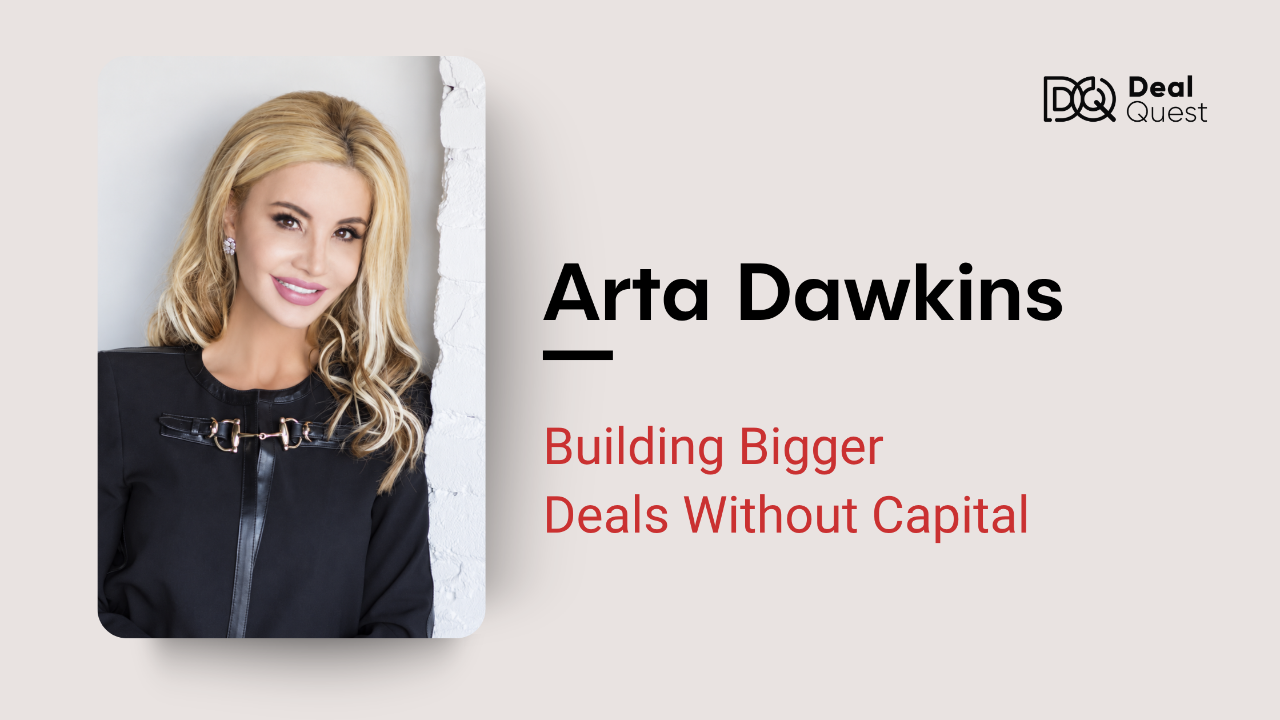
In this episode of the DealQuest Podcast, I'm excited to sit down with Arta Dawkins, an entrepreneur, luxury real estate realtor, and author based in Toronto. Arta started making deals in Albania in her early twenties, building an import and export business with no personal capital by finding a real need and structuring prepaid transactions around it. After immigrating to Canada, she rebuilt her career with RE/MAX Professionals Inc., earning Circle of Legends and Hall of Fame honors and previously ranking among the top one percent of Toronto real estate professionals.
We talked about her first deal, starting over in a new country, the one-stop-shop approach that turned a single listing into land development, and a painful lesson in due diligence. We also dug into her book, Add the Zeros, and the negotiating ideas behind it. Whether you're bootstrapping without outside money, working on cross-border deals, or trying to grow from single transactions into bigger ones, Arta's story shows how much value a clear-eyed dealmaker can create by connecting a need with the people who can fill it.
Starting With a Need Instead of Capital
Arta's first deal came out of a job in the business development office at the mayor's office, fresh out of school. Every week, factory owners came in to complain that they couldn't get the materials to produce packaging, and without packaging they couldn't ship their products. The officials moved slowly, so after six months she quit and went to work on the problem herself.
She reached outside the country to source the packaging, then brought it to the factories using prepaid deals because, as she put it, she had literally no capital at all. Three large companies turned her down, so she went to smaller ones, which then began competing with the big companies. One deal led to another. "Money is not the only source of capital to start a business," Arta said. "You just have to identify a real need and then create value from there."
I've talked on this show many times about the mindset gap between entrepreneurs and dealmakers. Plenty of people would have noticed the packaging problem. Very few would have seen a deal in it and then acted. Arta's explanation was simple. "I had nothing to lose. I think they had more to lose than I did." If you want more on that dealmaker mindset, my solocast conversation with Sara Mostafa on what makes a true dealmaker is a good companion to this one.
Prepaid Deals and Keeping Control
I see more situations than people realize where a company that thinks it needs to raise capital could instead get paid in advance by its customers or clients. That revenue was coming anyway, and collecting it up front can mean avoiding debt or bringing in an equity partner. It doesn't apply everywhere, but it's an option worth considering.
Arta agreed and added an important point. When you take outside money, "you also lose power and control over your company." She was equally clear about what makes prepayment possible. Trust and relationship are the main motive, and without them, the person paying you in advance is taking a real risk.
Treating Clients as Lifetime Value
Arta made the case that anyone can make a sale. The question is why a person or company should do business with you specifically, and what value you bring that someone else doesn't. She asks herself whether she is looking at a client as a dollar sign or as a lifetime relationship.
She treats every client, whether a person or a corporation, as long-term value. "Everyone wants someone to trust," she said. That view runs through everything she described in our conversation, from her first deals in Albania to repeat business in Toronto luxury real estate.
Rebuilding From Scratch in Canada
In 1999, with the political situation in Albania growing tense and two small children to care for, Arta made the decision to immigrate to Canada. She left behind a business with seventy-eight employees, winding it down and passing it to a partner so some of the staff could keep earning a living. She was candid that her focus on the business had kept her from seeing the risks around her. "The bigger you go," she said, "the more enemies you have."
In Canada, she deliberately worked for someone else first so she could learn how Canadian consumers behaved. She worked as a subcontractor selling credit cards and long distance lines at Pearson Airport, where she quickly earned the nickname Barracuda because so many people signed up. Her takeaway was that principles in business travel across borders, and people want to be heard and have things explained. After a few years in California, she returned to Canada, completed her real estate courses online, and started in real estate in 2007, which she called "the worst market ever."
Turning One Listing Into a Development Deal
Arta got her first real estate deal during her first week, through an open house. It was a million dollar home whose owners hadn't been able to sell it for three years. With the Canadian dollar low at the time, she advertised and called investors in other countries and sold it in three weeks.
The owner had significant equity in the home, and when she asked about his plans, he said he had none. She had one. The land could be subdivided into three lots, and this time he could build three purpose-built homes instead of a home builders assumed everyone would like. That land development led to bigger deals, and it became the one-stop-shop strategy she writes about in her book.
Arta also stressed the importance of working the numbers alongside the client. She walks developers through soft costs, hard costs, the time a project will take, and the turnaround, and she stays conservative. "Math doesn't lie," she said. When people understand clearly why they should be involved in a deal, and it works for them, "they will never get rid of you because it's a win win situation."
Building a Brand That Holds Its Value
Within three or four years, Arta's name had grown into a brand. Rather than send that money only to taxes, she put some of it toward advertising, buying around thirty billboards around town. Her reasoning was about negotiating position as much as visibility. When people call you because of your brand, "they're not going to negotiate your value."
That trust compounds. Arta described a street where a builder built three homes, each over four million dollars. Over seven years, she sold each of those homes three times and double-ended all of them, representing both sides of the transaction. She even got the call to list when a buyer she hadn't represented later decided to sell.
A Hard Lesson in Due Diligence
Success brought its own risk. Around five years into her real estate career, a developer of custom homes called her with four or five high-end homes in inventory, all in ravine settings and worth about forty-five million dollars in total. She took the listings and sold three of them, then handed the closing paperwork to her assistant because she was so busy.
When her team called to arrange the buyers' final visits, no one answered. Then an email arrived from a private lender. The properties had been foreclosed on during escrow because of a blanket mortgage she hadn't uncovered when she took the listings. More than forty million dollars in deals never closed. "Had I been doing more due diligence, I would have seen some signs," she said.
What stayed with me was her honesty about what hurt most. It wasn't the lost commission. It was "thinking about it for too long." Every entrepreneur has setbacks that don't make it onto social media, and the ones who keep going learn from them. For Arta, the lesson was quality over quantity. For a deeper look at this side of dealmaking, our conversation with Josh Emington about the due diligence layer that decides whether a deal is real fits right alongside her story.
Confidence Comes From Preparation
Arta's book covers how to negotiate with confidence without arrogance, leave your ego aside, and know your value well enough to say no. Those ideas line up closely with what I write about in Authentic Negotiating, including owning your value and recognizing the deal killers of desperation, scarcity, and fear.
I pushed her on a practical question. Telling people to be confident doesn't help much if confidence doesn't come naturally to them. Her answer was direct. "I do believe, Corey, that confidence comes from preparation and due diligence." Know what you're facing, know who is on the other side, and know what you're selling, buying, or trading. As she put it, "It's not just like dress up, polish and just be confident."
Detachment and the Willingness to Walk Away
Arta said that people can spot desperation, and when you have doubts about yourself, the deal is unlikely to happen. Her advice is to be willing to walk away at the end. "Detach if it's not meant to be yours," she said, "because you're worth more to another deal."
I often point out that every negotiation training says you have to be able to walk away, but many people walk away from anger, upset, or ego instead of clarity. Arta described it as keeping "your nervous system calm." For her, that means long walks with her dogs and her favorite music. "If someone does not respect your value, what you bring on the table, walk away."
Deals Happen in Any Market
Arta's closing advice was that "good market, bad market, deals are always happening." People retire, people divorce, estates need to be sold, and she is seeing baby boomers sell businesses that the next generation doesn't want to run. Those owners need help, and someone who brings real value can provide it.
I agree completely. Deals in tough markets may look different, be priced differently, or be structured differently, but they still get done, and a lot of money has been made in difficult markets by people who know how to take advantage of them.
Conclusion
Tune in to this episode to hear Arta Dawkins share how she built her first business without capital, rebuilt her career after immigrating to Canada, and grew into larger real estate and development deals. From prepaid deal structures to due diligence, branding, and detachment in negotiation, this conversation offers practical lessons for anyone who wants to make bigger deals. When I asked what freedom means to her, Arta said it has shifted from money to inner peace, family, and the freedom to travel. "Freedom is what you make out of it." If you're interested in the real estate side of building freedom, check out our conversation with Jens Nielsen on building real estate freedom.
WANT TO BE A GUEST ON DEALQUEST?
Apply here: https://beaguestondealquest.com/guest
• • •
Listen to the full DealQuest Podcast episode here
• • •
FOR MORE ON ARTA DAWKINS
Arta Dawkins' LinkedIn
ArtaHomes
Add the Zeros (How to Create Value, Earn Trust, and Make Bigger Deals)
FOR MORE ON COREY KUPFER
https://www.linkedin.com/in/coreykupfer/
https://www.coreykupfer.com/
Corey Kupfer is an expert strategist, negotiator, and dealmaker. He has more than 35 years of professional deal-making and negotiating experience. Corey is a successful entrepreneur, attorney, consultant, author, and professional speaker. He is deeply passionate about deal-driven growth. He is also the creator and host of the DealQuest Podcast.
Get deal-ready with the DealQuest Podcast with Corey Kupfer, where like-minded entrepreneurs and business leaders converge, share insights and challenges, and success stories. Equip yourself with the tools, resources, and support necessary to navigate the complex yet rewarding world of dealmaking. Dive into the world of deal-driven growth today!

